Subterranean termite treatment in Springfield addresses the region's prevalent Eastern subterranean termite species, which nests underground and builds protective mud shelter tubes across foundation walls to reach…
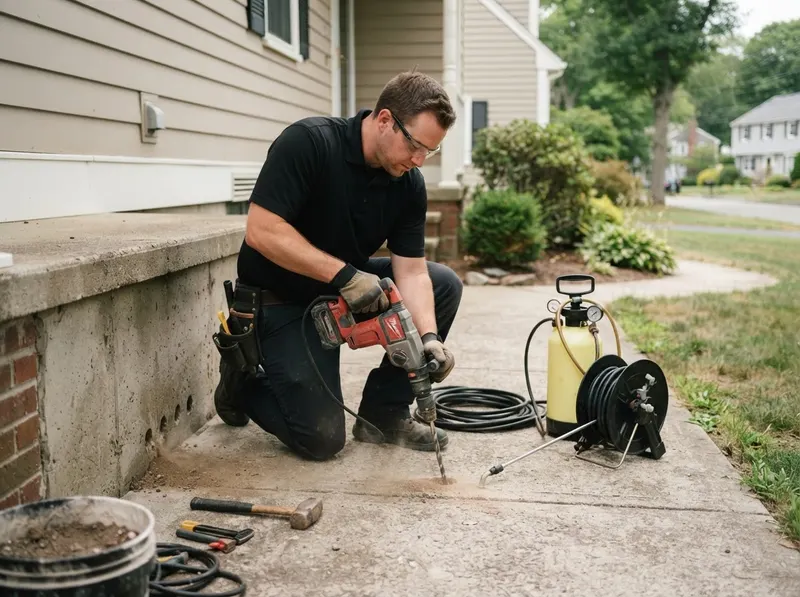
Subterranean termite treatment in Springfield addresses the region's prevalent Eastern subterranean termite species, which nests underground and builds protective mud shelter tubes across foundation walls to reach structural wood framing. In older residential neighborhoods like McKnight and Forest Park, properties frequently feature fieldstone, porous brick, or unsealed mortared block foundations that allow subterranean workers direct subterranean access to floor joists, sill plates, and load-bearing timber. Homes situated near high-moisture zones such as Blunt Park or the Connecticut River corridor in Metro Center face accelerated cellulose decay, drawing colonies from deep within the damp sandy loam typical of Hampden County.
Effective defense relies on two clinical protocols: continuous non-repellent liquid soil barriers and exterior perimeter bait matrix systems. Liquid barrier treatments require digging a 6-inch by 6-inch trench along the foundation exterior, applying termiticide at a standard rate of 4 gallons per 10 linear feet per foot of depth, and rod-treating the soil to bedrocks or footings. Termites cannot detect this non-repellent compound; worker termites walk through it, transfer the active ingredient back to the central nest via social grooming, and collapse the entire reproductive colony within 30 to 90 days. For properties built on monolithic slabs, expansive paved perimeter walkways near Boston Road, or structures located near private wells in Indian Orchard, installing tamper-resistant exterior baiting stations every 10 to 12 feet presents a precise alternative that utilizes insect growth regulators to disrupt the molting cycle without drilling into finished flooring.
Selecting between treatments hinges on foundation geometry and structural constraints. A liquid barrier delivers immediate chemical defense along exposed soil lines but requires drilling through exterior concrete patios or garage slabs every 12 inches to establish an unbroken barrier. Exterior bait systems require zero structural drilling, safeguard delicate utility lines, and thrive in complex architectural profiles common in Liberty Heights and Upper Hill, though eradication requires routine monitoring across 60 to 180 days. Orevian Pest Solutions executes both protocols using science-backed Integrated Pest Management standards, maintaining clear treatment logs and objective protection plans without mandatory monthly recurring commitments.
Every job gets a firm, written price after a free on-site visit.
Tell us about your subterranean termite treatment job in Springfield and we'll send a clear, written quote, usually the same day.
 Orevian Pest Solutions