Silverfish thrive exclusively where relative humidity stays sustained above 75 percent, feeding on starch, paper sizing, and wallboard adhesive. In historical Springfield neighborhoods like McKnight and Forest Park,…
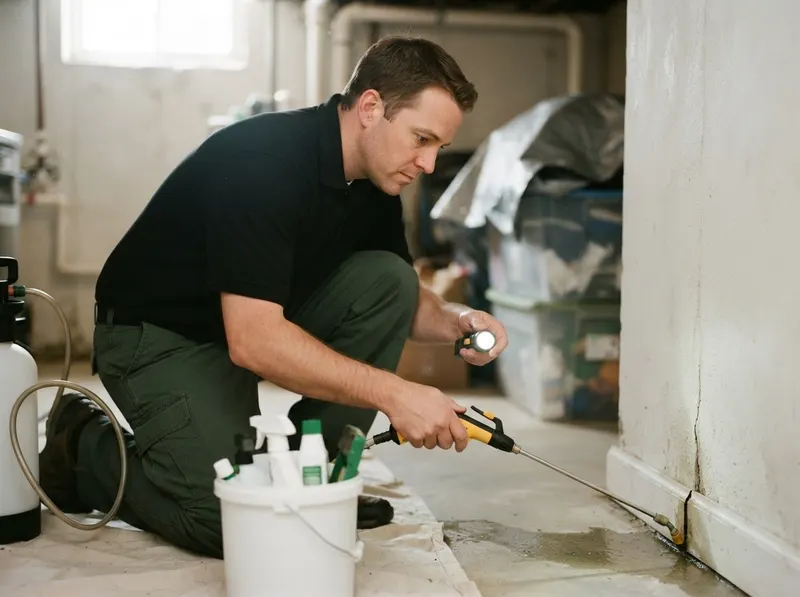
Silverfish thrive exclusively where relative humidity stays sustained above 75 percent, feeding on starch, paper sizing, and wallboard adhesive. In historical Springfield neighborhoods like McKnight and Forest Park, multi-story balloon framing and stone-and-mortar foundation walls create vertical moisture corridors between basement dampness and upper-floor eaves. The treatment protocol isolates these biological vectors. Rather than broadcast chemical spraying, technicians deploy inorganic desiccant dusts such as amorphous silica inside baseboards, beneath insulation layers, and within pipe chases. This directly disrupts the waxy lipid layer of the insect's exoskeleton, triggering rapid mechanical dehydration regardless of temperature fluctuations.
A single female silverfish produces between 2 to 20 eggs daily, hiding them in dark crevices, behind damp wallpaper, or inside stored book collections. In slab-on-grade or updated multi-family units across Metro Center, Six Corners, and Indian Orchard, moisture retention frequently gathers beneath subflooring, bath traps, and utility closets along Boston Road. If left unaddressed, silverfish colonies contaminate household dry goods, mastic glues, and historic plaster lath, causing irreversible surface degradation. Our intervention combines baiting with botanical micro-aerosols in concealed wall voids, breaking the reproductive instar stages without requiring occupants to vacate premises for days at a time.
Decision guidance depends on current site conditions: if localized activity occurs solely inside a dry second-floor bedroom, passive dehumidification combined with targeted surface traps can monitor the perimeter; if active silverfish nymphs and firebrats appear simultaneously in bathrooms, basements, and pantries across Liberty Heights or East Forest Park, specialized void injection and moisture remediation provide permanent colony collapse. The trade-off is mechanical isolation versus chemical reliance; mechanical desiccant injection requires structural access to plumbing penetrations, but it maintains residual activity for up to 10 years as long as the treatment zone remains dry.
Every job gets a firm, written price after a free on-site visit.
Tell us about your silverfish and moisture pest elimination job in Springfield and we'll send a clear, written quote, usually the same day.
 Orevian Pest Solutions